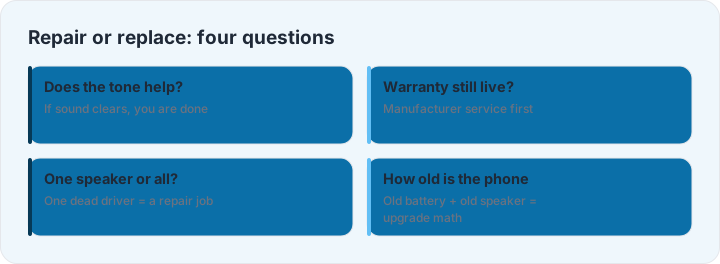
Sound problems invite two bad decisions: paying to repair a speaker a free tone would have fixed, or replacing a device worth saving. The math is shorter than it looks — four questions, in order of cost.
Question 1: did the free fixes actually run?
Before any money changes hands, the zero-cost candidates: the eject tone for water (seconds), the cleaning sweeps for dust (minutes), and the case-off test from the muffled guide (seconds). A solid majority of “broken speaker” cases end here, at a total cost of nothing. Only when these fail is there a hardware conversation at all.
Question 2: who owes you a fix?
Within warranty or an insurance plan, the answer is the manufacturer’s — use it before DIY anything, because self-repair flags can void coverage. Out of warranty, third-party shops quote speaker work far below manufacturer service; get the quote before deciding anything else.
Question 3: what does each path cost?
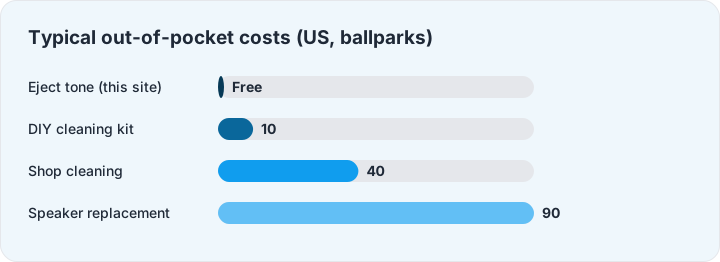
Ballparks for a phone speaker out of warranty: a DIY cleaning kit runs about ten dollars and fixes mesh debris; a shop cleaning is around forty; a full speaker replacement lands near ninety parts and labor on common models. The chart below puts the ladder in perspective — including this site, which is free and sometimes the whole answer.
Question 4: how old is the phone?
This is the question that flips borderline decisions. A four-year-old phone with an original battery is also a phone with a tired battery: ninety dollars of speaker work on a device that needs a battery and a screen soon is upgrading with extra steps. The same repair on a two-year-old phone is plainly rational. A useful rule: if the repair quote exceeds a third of the phone’s current resale value and two other components are aging, replace; otherwise repair with confidence. Whatever you choose, do it with the numbers in front of you — the chart below is the shape of that math.